Living with khadi
Hand-spun, hand-woven, and better after a year than it was on the first day. How khadi behaves, and how to wash it without ruining it.
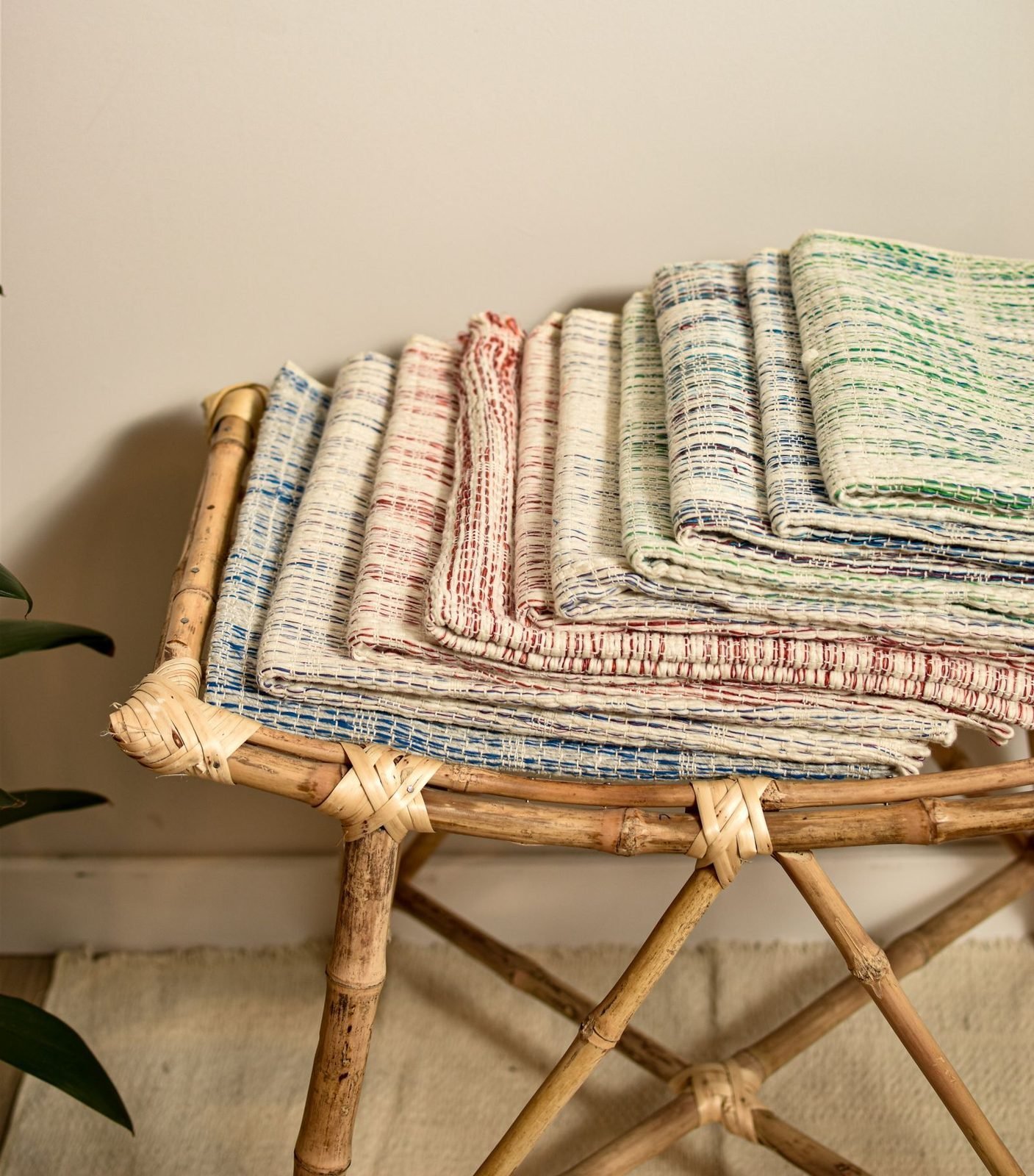
Khadi is defined by process rather than by fibre: the yarn is spun by hand and the cloth is woven by hand. That is the whole definition, and it is the reason khadi behaves differently to mill cotton.
It breathes because it is uneven
Hand-spun yarn varies in thickness along its length. Woven up, that unevenness leaves microscopic gaps that mill cloth does not have, and air moves through them. It is why khadi is comfortable in an Australian summer in a way that a flat, uniform cotton is not.
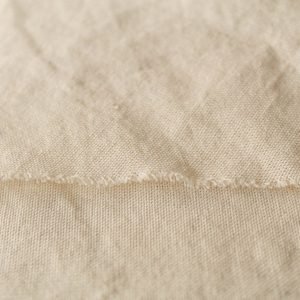
Those same irregularities — a slightly thicker thread here, a slub there — are sometimes mistaken for flaws. They are the cloth telling you how it was made.
It improves
Khadi softens with washing and wearing, and keeps softening for a long time. A piece you have had for a year is better than the one you unwrapped.
Washing it
Hand wash in cold water, and wash it separately for the first few washes — hand-dyed cloth gives up some colour early, and it will find anything pale you put with it. Use a mild detergent and do not wring it; press the water out instead.
Drying and storing
Dry in shade. Direct Australian sun will flatten natural dyes faster than anything else you can do to them. Store folded rather than on a hanger, and refold along a different line every few months so the creases do not set into permanent lines.
Ironing
A medium iron while the cloth is still slightly damp works best. Khadi takes a crease well and loses it just as easily, so there is no need to fight it.