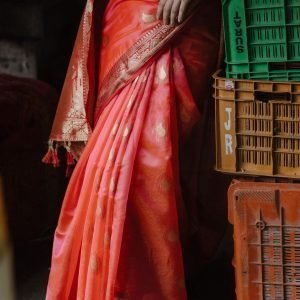
Reading a Maheshwari weave
Three to five days on a pit loom, and a border that tells you where it was made. What to look for in a handwoven silk saree.
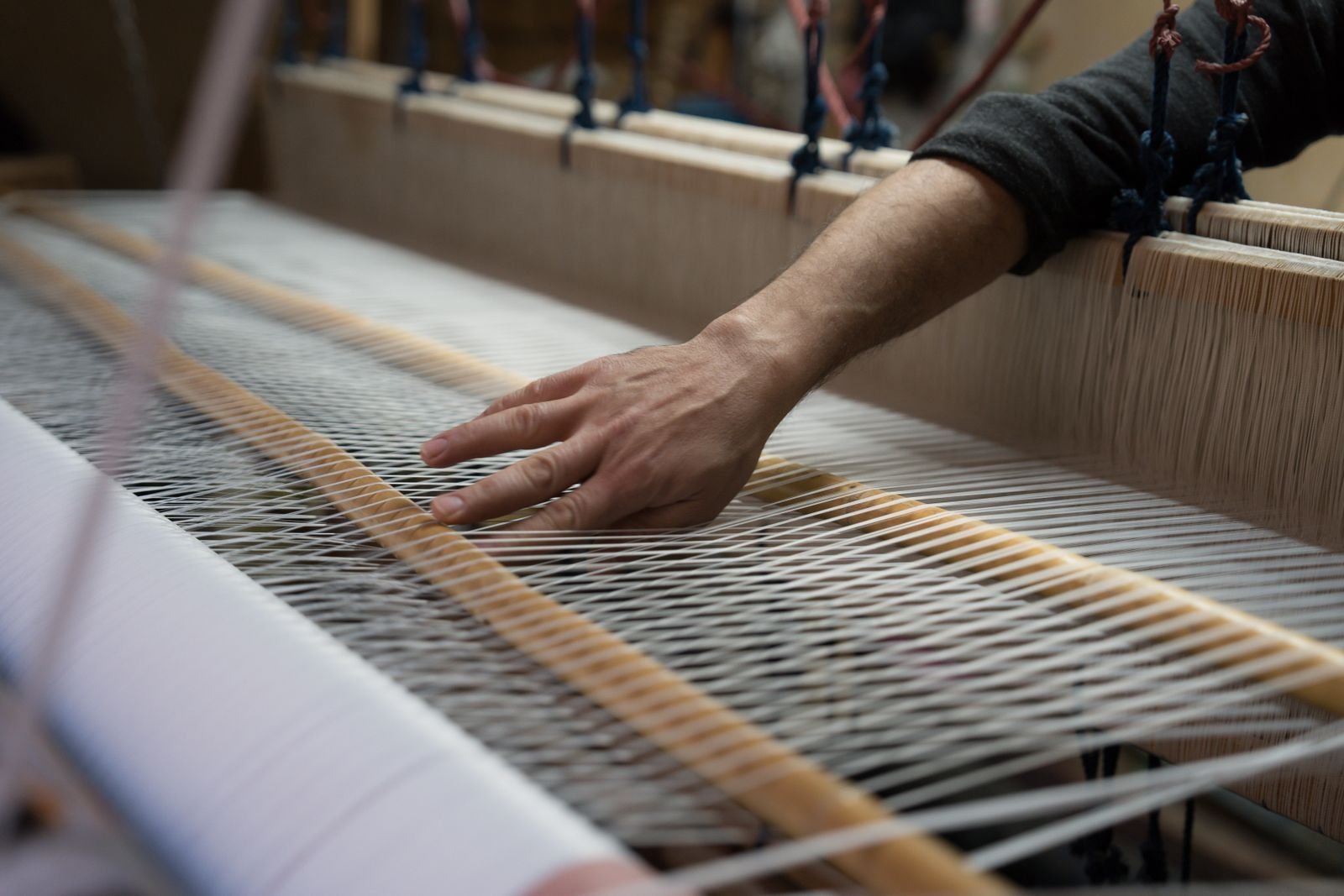
Maheshwar sits on the north bank of the Narmada in Madhya Pradesh, and the weave that carries its name has been made there for roughly two and a half centuries. If you know what to look for, a Maheshwari saree tells you a good deal about itself.
The weight is the first clue
A genuine Maheshwari is light. The traditional weave pairs a silk warp with a cotton weft, which is what gives it that particular fall — it drapes without stiffness and folds down small enough to sit in a palm. A saree that feels heavy or board-like in the hand is usually something else.
The border does the talking
The zari border is where the region announces itself. Look at the patterns worked into it: narrow stripes, and repeating motifs drawn from the carvings on the fort and the ghats — the chatai mat weave, the chameli flower, the brick pattern. These are not decoration chosen at random; they are quotations from the town.
Reversible by design
A traditional Maheshwari border can be worn either way round, because it is woven to read on both faces. It is a detail almost nobody notices until it is pointed out, and then it is hard to unsee.
Why the colour varies
Yarn is dyed and dried in the sun before it reaches the loom. Sun and water and the particular batch of dye all have a say, so two sarees of the same stated colour will not be identical. Held apart they look the same; held together, they do not.
How long it takes
Three to five days of weaving on a pit loom for a single saree, before any finishing. That number is worth sitting with when you are comparing prices.