How a Dokra piece is cast
The mould is broken to release the brass, which is why no two pieces are ever the same. A look at a four-thousand-year-old method still worked by hand.
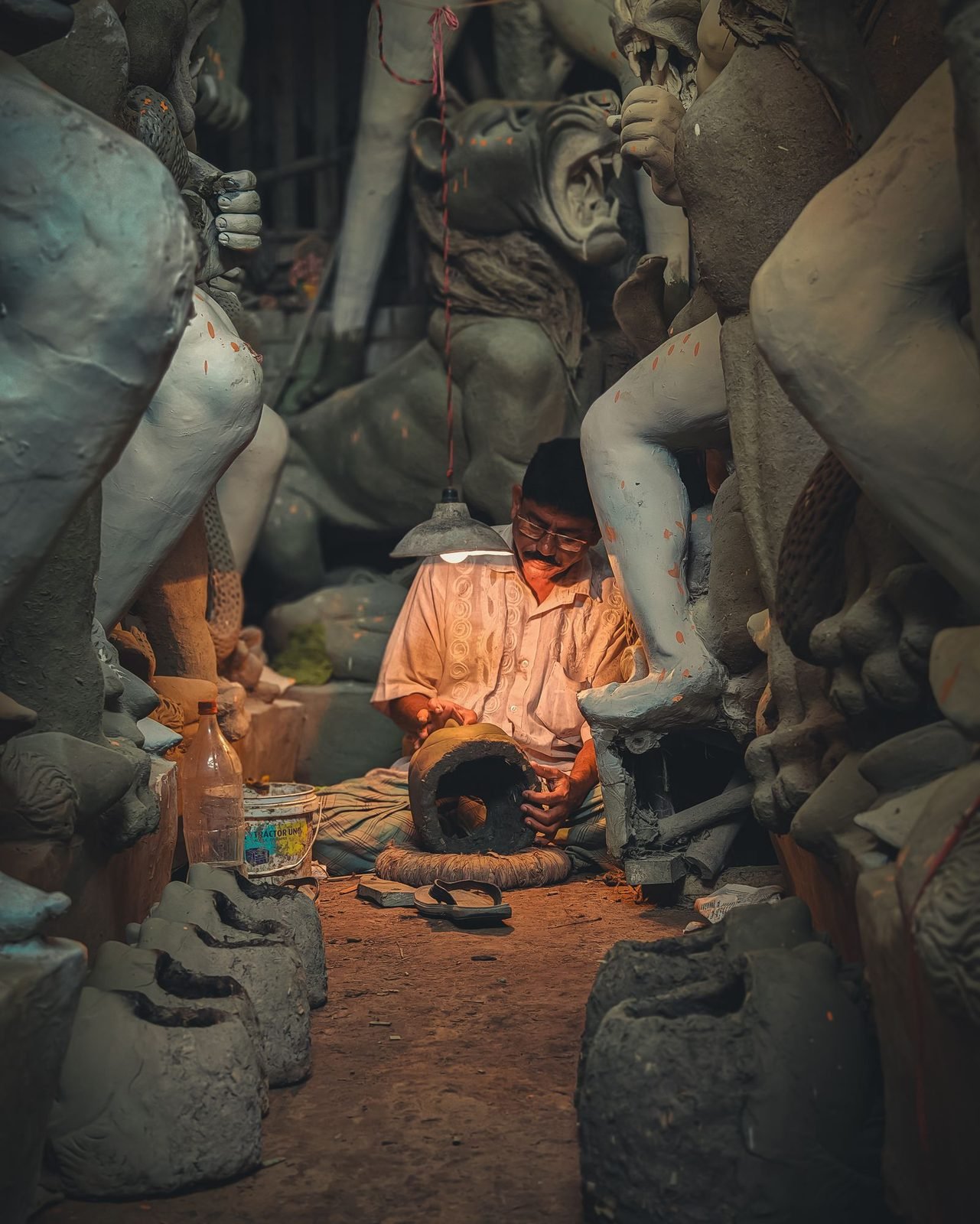
Dokra is lost-wax casting, and the name describes the method exactly: the wax is lost. It does not survive the process, and neither does the mould. What comes out the other side exists once.
It starts with clay
The artisan shapes a core from river clay and lets it dry hard. This core is not the piece — it is the empty space inside the piece. Everything that follows is built around it.
The pattern is drawn in wax
Fine threads of beeswax are rolled by hand and wound around the clay core, one at a time. The coiled lines you can see on a finished Dokra piece are these threads. They are laid down once, freehand, and there is no way to correct them later — the wax is the drawing, and the drawing becomes the metal.
A second layer of clay goes over the wax, thin enough to pick up every detail, and then a thicker layer over that for strength.
The wax is lost
The whole thing is heated. The wax melts and runs out through a channel left for the purpose, leaving a cavity the exact shape of those threads. Molten brass — often scrap, collected and re-melted — is poured into the gap in a single pour. There is no second attempt: the metal either fills the cavity or it does not.
The mould is broken
Once the brass has cooled, the clay is broken away and discarded. The mould cannot be reused, because there is no mould left. The piece is then filed and polished by hand.
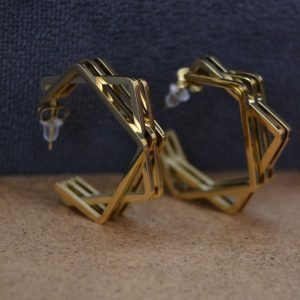
This is why two Dokra earrings from the same workshop, made the same week, will differ slightly in weight and in the spacing of their lines. It is not a tolerance problem. It is the method.
Living with brass
Brass darkens with wear as it reacts with skin and air. Some people polish it back; others let the patina build. Neither is wrong — a brass cloth will brighten it whenever you want, and doing nothing is also a choice.